

Last week, we discussed customs and economic sanctions, so next time you are importing or exporting a good, you will be well informed about the risks and how to prevent them.
However, not only is international trade changing; in an era defined by automation and digital customs platforms, the role of customs brokers is undergoing one of its biggest shifts in decades.
What was once a profession rooted in paperwork, manual processes, and face-to-face interactions is now being redefined by artificial intelligence, blockchain, and government-driven digital transformation. These changes raise a crucial question: are customs brokers entering a new stage of evolution, or is their profession at risk of disappearing?
As businesses push for faster, more transparent cross-border operations, Mexican customs brokers must adapt to remain relevant. The future of the profession will depend not only on technology adoption but also on how brokers reposition themselves as strategic partners in global trade. In today’s article, we’ll explore the forces reshaping the industry and what they mean for the next generation of customs professionals.
Why is the role of customs brokers at a turning point?
The customs brokerage profession is experiencing a pivotal moment shaped by rapid technological, regulatory, and market transformations. Global trade is becoming increasingly digital, driven by government initiatives to modernize border controls and the growing demand for faster, more transparent supply chains.
As a result, the traditional functions of customs brokers are being reconfigured. Today, brokers face a dual challenge: adapting to new digital workflows while maintaining the specialized knowledge that ensures compliance and minimizes risk.
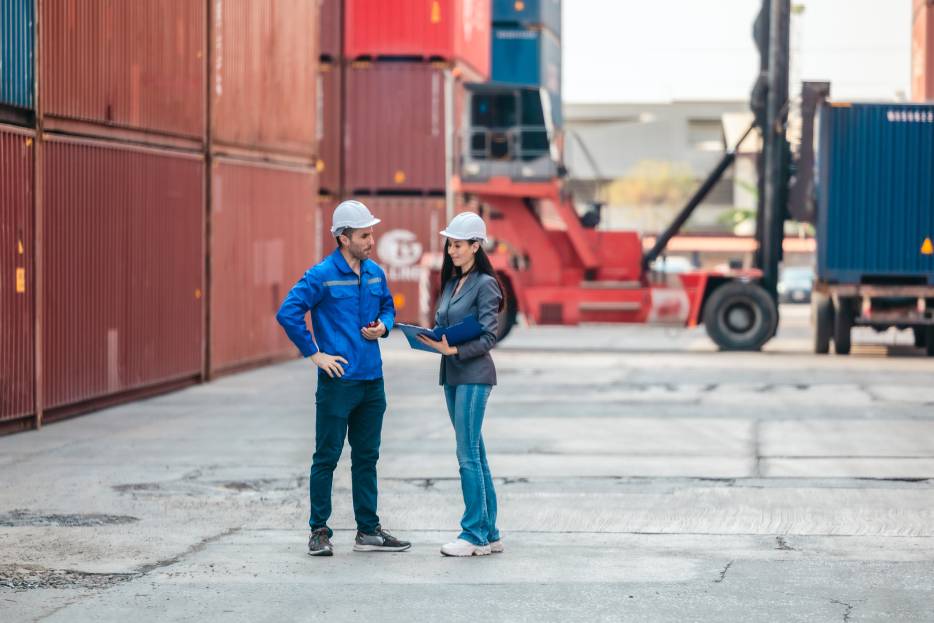
Key technologies reshaping the customs brokerage industry
As we mentioned, the customs brokerage industry is being transformed by disruptive technologies that automate routine tasks, increase data accuracy, and strengthen the integrity of global supply chains.
These innovations are not simply tools; they are redefining how brokers interact with clients, customs authorities, and international trade platforms. Hereunder, we’ll develop some of these technologies to understand why is it crucial for brokers to adapt to them to remain competitive.
1.- AI and automation
Artificial intelligence and automation are rapidly streamlining tasks that once required hours of manual effort. AI-driven systems can extract data from invoices, certificates, and shipping documents with high accuracy, flag inconsistencies, and complete customs declarations in seconds.
This reduces human error and frees brokers to focus on value-added activities such as compliance consulting or risk mitigation. Instead of replacing brokers, AI enhances their capabilities by handling repetitive administrative work while allowing them to apply professional judgment where it matters most.
2.- Blockchain
Blockchain technology is introducing new levels of trust and transparency to supply chains. Because blockchain records are immutable and shared across all stakeholders, brokers can access verified documentation, shipment histories, and compliance details without relying on intermediaries.
This reduces the risk of fraud, speeds up verification processes, and supports smoother customs clearance. For brokers, blockchain offers the opportunity to work within highly secure digital ecosystems that minimize disputes and improve the reliability of cross-border operations.
3.- Customs single windows and digital customs platforms
Many governments are adopting “single window” systems, which are centralized digital platforms where all trade-related documents can be submitted and processed. These platforms simplify communication with customs authorities, reduce processing times, and eliminate redundant submissions.
Mastery of digital customs environments not only speeds up clearance but also positions brokers as specialists who can guide clients through changing procedural requirements.
4.- Data Analytics
Data analytics is becoming a critical tool for brokers looking to differentiate their services. By analyzing patterns in shipment data, tariff classifications, and compliance outcomes, brokers can identify risks, uncover cost-saving opportunities, and offer predictive insights to clients.
This transforms the role of the broker from a reactive administrator to a proactive advisor. Companies increasingly value brokers who can turn raw data into strategic intelligence, making analytics proficiency a major competitive advantage.

Are customs brokers becoming obsolete?
The rapid rise of automation and digital customs systems has sparked concern that customs brokers may eventually be replaced by technology. However, this perception overlooks a crucial reality: while machines excel at processing structured data and completing repetitive tasks, they cannot replicate the depth of judgment, contextual reasoning, and specialized knowledge that customs brokerage requires.
Global trade is governed by a constantly evolving mix of international agreements, national regulations, tariff updates, exemptions, and compliance protocols. Navigating this environment demands expertise that goes beyond what current digital tools can interpret.
Far from making brokers obsolete, technological change is highlighting the value of human oversight in areas where accuracy and risk management are critical.
Automated systems may flag discrepancies or generate declarations, but they cannot assume legal responsibility, interpret ambiguous regulations, or manage complex cases.
As governments adopt stricter security controls and more sophisticated risk-based inspection models, the role of brokers becomes even more vital. They ensure that shipments meet compliance standards, help prevent costly delays, and protect companies from penalties or seizure of goods.
Challenges customs brokers must overcome to stay relevant
Despite the opportunities created by digital transformation, customs brokers face significant challenges that could limit their ability to compete if not addressed proactively. One of the most urgent obstacles is the resistance to innovation that persists in parts of the industry.
Many brokers still rely on legacy systems, manual workflows, or outdated processes that slow operations and reduce efficiency. As customs authorities and global supply chains adopt digital platforms, brokers who fail to modernize risk being excluded from streamlined procedures or losing clients who expect faster, technology-driven services.
Another major challenge is the widening talent and skills gap. The new digital environment demands brokers who are not only experts in customs regulations but also comfortable with data analytics, automation tools, and integrated logistics systems.
Finally, modern logistics networks rely on real-time data exchange and seamless communication between different departments. Brokers who operate in isolation or with fragmented systems may find it hard to deliver the transparency and speed required by today’s cross-border operations.
Achieving true integration often involves overcoming technical barriers, investing in interoperable software, and establishing closer collaboration with partners across the supply chain. Those who succeed will position themselves as indispensable links in the global trade ecosystem; those who do not risk being left behind.
Now that you’ve learned more about the future for customs brokers, contact us; we have the tools, the technology, and the expertise to assist you in your international trade procedures. Also, if you found this article useful, share it on social media and stay tuned to our blog for more updates.

 Spanish
  English