

International trade does not function on market forces alone. Behind every shipment that crosses a border lies a complex system of regulation, verification, enforcement, and coordination, as we saw in our last article about legal liability in global supply chains.
This institutional strength is what enables governments to control borders efficiently while still facilitating the smooth flow of goods. Without it, global trade would face delays, uncertainty, and heightened risks.
Border control in international trade is more than inspecting cargo. It involves customs enforcement, tariff collection, and the prevention of illicit activities. Strong state capacity ensures that these processes are predictable, transparent, and aligned with international agreements. At the same time, it creates a framework where trade actors can operate with legal certainty.
Within this structure, Mexican customs brokers play a crucial intermediary role. They navigate regulatory systems, ensure compliance with customs law, and act as operational links between private companies and state authorities.
In this article, we will explore how institutional strength shapes international trade dynamics and why customs intermediaries remain essential actors in modern border management.
State capacity in international trade
State capacity refers to a government’s ability to design, implement, and enforce laws and policies effectively. In the context of international trade, this capacity determines how efficiently a country can regulate cross-border transactions, collect revenues, enforce compliance, and protect national security without obstructing legitimate commerce.
It is not merely about having laws in place; it is about possessing the institutional strength, technical expertise, administrative coordination, and technological infrastructure necessary to make those laws function in practice.
In global trade systems, strong state capacity translates into predictability. Businesses rely on clear customs procedures, transparent tariff structures, and consistent enforcement mechanisms to plan logistics, calculate costs, and meet delivery timelines. When institutions operate efficiently, border processes become structured rather than arbitrary.
This reduces uncertainty, limits corruption risks, and enhances investor confidence. Conversely, weak administrative systems often result in delays, inconsistent inspections, regulatory confusion, and higher transaction costs that ultimately undermine competitiveness.
Border agencies are at the core of this institutional framework. Customs authorities must balance two objectives that can appear contradictory: facilitating trade flows while maintaining strict control over goods entering and leaving a country. Effective governance requires sophisticated risk assessment systems, inter-agency coordination, and data management tools capable of distinguishing between low-risk shipments and those that require detailed inspection.

What does border control imply?
Border control is a fundamental mechanism through which states safeguard economic stability in the context of international trade. Far from being a mere checkpoint for goods, it represents a structured system of regulation, supervision, and enforcement that protects national revenue, ensures market fairness, and maintains compliance with domestic and international laws.
Effective border control allows governments to monitor trade flows, collect tariffs and duties accurately, and prevent illicit activities that could distort competition or undermine fiscal policy.
1.- Revenue protection
One of the central economic functions of border control is revenue protection. Customs duties, value-added taxes on imports, and other trade-related charges constitute significant sources of public income in many economies.
When customs systems operate with strong oversight and transparency, they minimize revenue leakage and strengthen public finances. Conversely, weak enforcement mechanisms can lead to underreporting, misclassification of goods, and fraudulent declarations, all of which erode state resources and compromise economic planning.
2.- Regulatory compliance
Border control also plays a critical role in ensuring regulatory compliance. Imported goods must meet safety standards, labeling requirements, environmental regulations, and industry-specific certifications.
By enforcing these standards at the point of entry, customs authorities protect consumers, domestic industries, and public health. This regulatory function contributes to economic stability by maintaining fair competition and preventing substandard or counterfeit products from entering the market. Predictable enforcement further reassures businesses that trade rules will be applied consistently.
3.- Operational efficiency
At the same time, modern border governance must balance control with efficiency. Excessive inspections or bureaucratic delays can disrupt supply chains, increase storage costs, and weaken a country’s attractiveness as a trade partner.
For this reason, advanced customs administrations implement risk management systems, digital documentation processes, and coordinated inspections to streamline clearance procedures. These measures reduce bottlenecks while maintaining oversight, creating a stable environment where commerce can flourish without compromising security.
Institutional Challenges in Border Governance
Despite its central role in economic stability and trade facilitation, border governance faces persistent institutional challenges that can limit efficiency and weaken state capacity. These challenges often stem from structural constraints, resource limitations, and evolving global trade dynamics.
As supply chains become more complex and trade volumes increase, customs systems must adapt quickly to technological, regulatory, and security demands. Hereunder are some of these challenges.
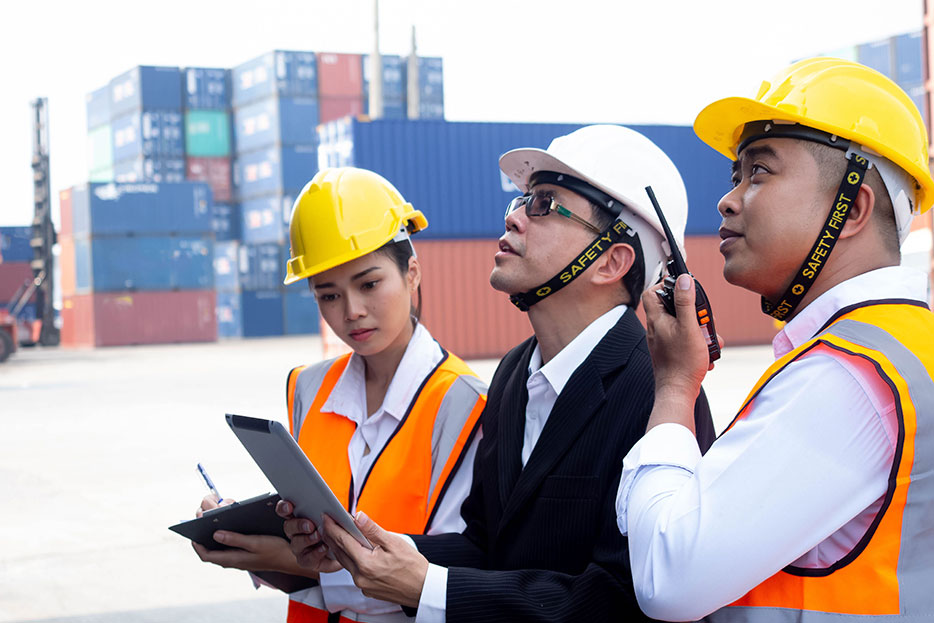
1.- Administrative capacity and infrastructure limitations
One of the primary obstacles in border governance is insufficient administrative capacity. Customs authorities require trained personnel, updated legal frameworks, integrated digital systems, and physical infrastructure capable of handling the growing volume of trade flows. Inadequate staffing, outdated technology, or fragmented data systems can slow down customs clearance processes and increase operational errors.
Infrastructure constraints, such as congested ports, limited inspection facilities, or weak inter-agency coordination, further complicate efficient border management. Without sustained investment and modernization, even well-designed trade policies may fail to be implemented.
2.- Corruption risks and oversight mechanisms
Border environments are particularly vulnerable to corruption risks due to the high volume of transactions and the discretionary authority involved in inspections and tariff classifications. Weak oversight mechanisms can lead to bribery, underreporting of goods, misclassification, or preferential treatment.
These practices not only reduce public revenue but also distort market competition and erode trust in institutions. Strengthening transparency through digitalization, audit systems, standardized procedures, and accountability frameworks is essential to mitigate these risks. Robust oversight mechanisms reinforce legitimacy and ensure that border control functions as a tool of governance rather than a source of systemic vulnerability.
3.- Policy reforms and trade modernization efforts
Adapting to global trade standards requires continuous policy reform and institutional innovation. Governments must align customs regulations with international agreements, implement electronic documentation systems, and integrate risk management technologies that allow for data-driven inspections.
However, reform efforts often face bureaucratic resistance, budgetary constraints, or gaps in technical expertise. Successful modernization depends not only on legislative change but also on institutional coordination and stakeholder collaboration.
Addressing these institutional challenges is essential to strengthening state capacity and sustaining efficient border governance. Now that you’ve learned more about state capacity and border control, don’t hesitate to contact us; we’ll be glad to assist you.

 English
  Spanish